Boolean expressions can be simplified by applying De Morgan's law, distribution, association, commutation and double negation.
Equivalent expressions produce the same outputs, even when one circuit uses fewer gates.
This page rebuilds the theory and activities from the supplied lesson decks as interactive practice.
Visual channel
Dual coding
Verbal channel
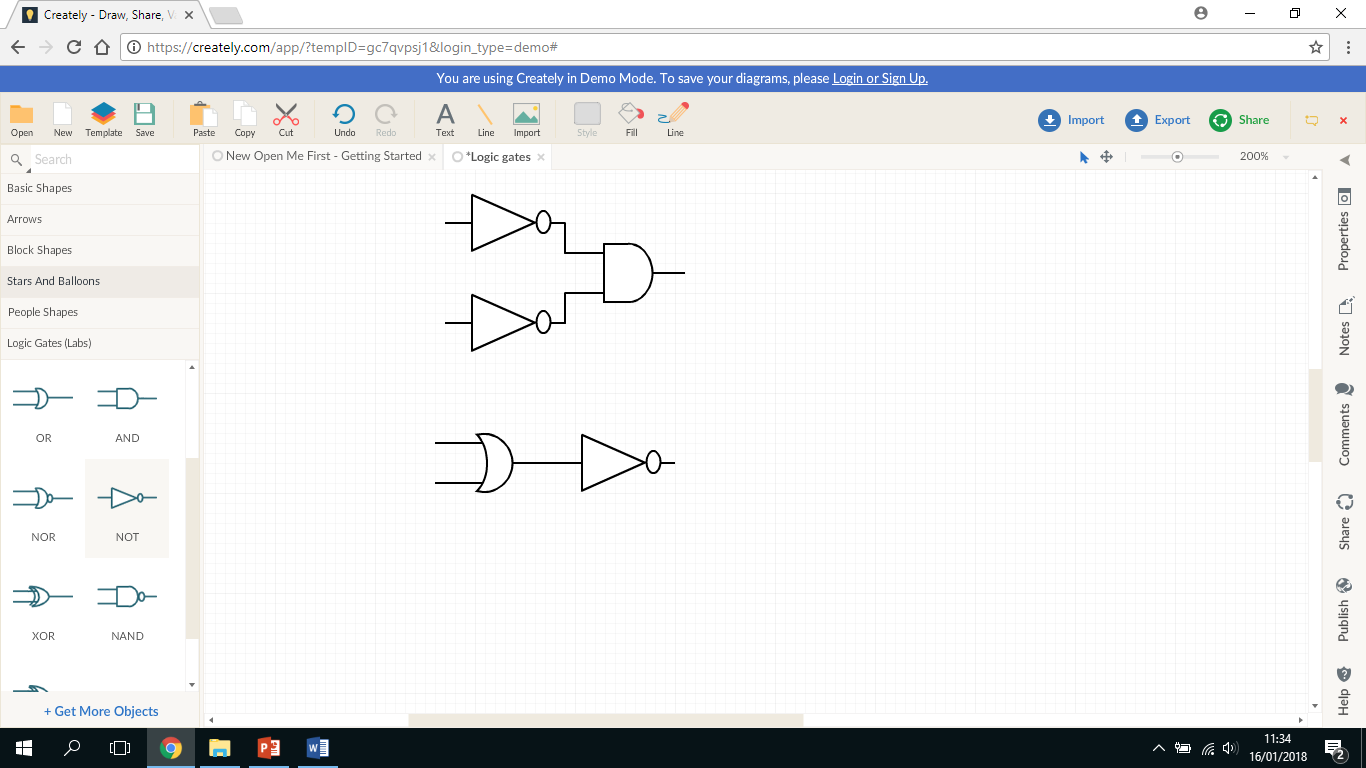
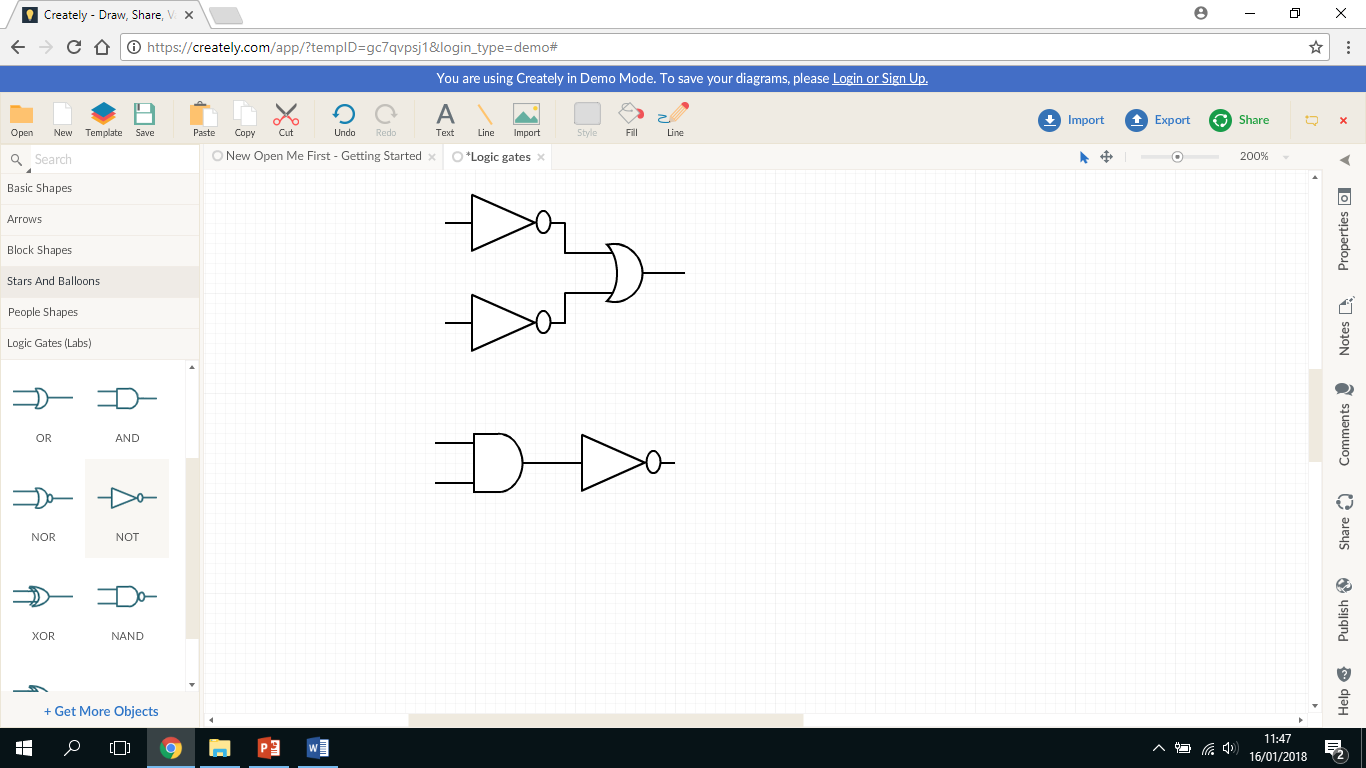
De Morgan's law changes AND to OR, or OR to AND, while negating the relevant terms.
Double negation removes pairs of NOT operators, for example ¬(¬A) = A.
Association removes unnecessary brackets when the same operator continues across the expression.
Commutation swaps the order of two terms without changing the output.
Distribution can expand or factor an expression to make simplification easier.
Activity 1
Build and connect Boolean gates
Drag copies of the gates onto the canvas. Click a placed gate to select it, then click an input connector on another gate to add a flexible wire. Click any wire to delete it.
Enter only 0 or 1 into each editable cell. The tables compare pairs of equivalent expressions from the lesson and answer slides.
Activity 3
Choose the alternative expression
Use the dropdowns to choose an equivalent expression. These prompts come directly from the supplied answer activity.
Activity 4
Worked example and simplification reflection
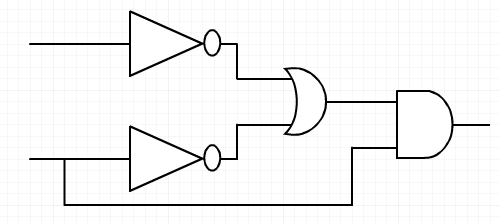
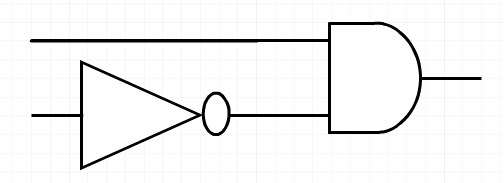
Compare the two screenshots from the answer deck, then decide which simplified expression matches the shorter circuit and explain why the simpler circuit is preferable.
Before simplification
(¬A V ¬B) ∧ A
After simplification
Equivalent shorter circuit
Reference
Source diagrams from the lesson decks
These screenshots from the supplied PowerPoints are included as reference examples alongside the interactive tasks.